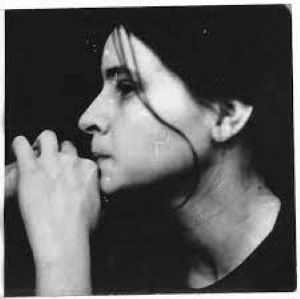
Zenta Dzividzinska (1944–2011) was a Latvian photographer, artist, and designer whose work is now recognized as an important part of late Soviet and postwar Baltic photographic culture. Born in Code Parish, Latvia, she studied at the Riga Secondary School of Applied Arts from 1961 and graduated in 1966. During her studies she attended a photography course taught by Gunārs Binde, while also developing an interest in more experimental and avant-garde artistic approaches. She continued her education at the preparatory course of the Latvian Soviet Socialist Republic State Academy of Art from 1965 to 1967 and later worked for many years as a creative artist and designer in applied graphic design. [1][2][3]
Photography, however, was not simply a technical skill or side occupation in Dzividzinska’s life. It became a medium of personal artistic inquiry. In 1965 she joined the Riga Photo Club, then the main center of photographic activity in Latvia, and in the same year she held her first solo exhibition, Riga Pantomime, in Riga. Between 1968 and 1972 she participated in local and international exhibitions. Her photographs from this period stand out for their attention to women’s lives, domestic scenes, friendships, self-representation, and everyday experience. Unlike the more conventional male gaze common in much photography of the period, Dzividzinska’s images often present women as active, embodied, and psychologically present subjects rather than decorative objects. [1][2][4]
Her work is notable for its unusual informality and visual freedom. Scholars and curators have described Dzividzinska’s photographs as spontaneous, unrefined, sometimes blurred, and resistant to academic compositional rules. She worked across portraiture, documentary observation, staged scenes, abstraction, and self-portraiture, often experimenting with framing, movement, cropping, and double exposure. Although her work was created within the Soviet cultural context, it frequently exceeded or sidestepped official aesthetic expectations. For that reason, it has later been discussed in relation to nonconformist art, feminist art history, and alternative photographic modernisms. [4][5]
A central part of Dzividzinska’s legacy is the series House Near the River, a deeply personal body of photographs documenting life in her ancestral rural home and the daily routines of several generations of women. This work is both intimate and historically revealing: it records domestic labor, family relations, aging, childhood, and the texture of lived experience in the Latvian countryside. At the same time, the series is not reducible to documentary evidence alone. Its power lies in the way it joins autobiographical closeness with formal experimentation and emotional subtlety. [1][4]
Much of Dzividzinska’s work remained unseen during her lifetime. Although she exhibited in the 1960s and later returned to public view with exhibitions such as Black and White in 1999 and I Don’t Remember a Thing in 2005, only a relatively small portion of her photographs circulated publicly. A large share of her artistic legacy survived primarily as negatives, prints, and archival materials rather than as a fully known or canonized body of exhibited works. As Alise Tifentale has argued, this relative invisibility was shaped not only by local circumstances in Soviet Latvia but also by the broader male-dominated photo-club culture of the period, which left little room for Dzividzinska’s idiosyncratic and quietly resistant visual language. [1][4]
After Dzividzinska’s death in 2011, the scope and significance of her archive became more visible. In 2021, part of her archive of negatives, prints, notes, and documents entered the collection of the National Library of Latvia, making systematic preservation, digitization, and research possible on a new scale. This development has opened the way for renewed scholarly and curatorial attention, including international interest in her work and its place within Baltic, Soviet, feminist, and photographic history. Today, Dzividzinska’s photographs are increasingly understood not as marginal curiosities, but as a rich and original contribution to twentieth-century photography. [1][3][4]
References
- Wikipedia, "Zenta Dzividzinska," accessed March 9, 2026. https://en.wikipedia.org/wiki/Zenta_Dzividzinska
- Art Days Forever, "Zenta Dzividzinska," accessed March 9, 2026. https://www.artdays.net/zdz-bio
- Latvijas Nacionālā bibliotēka Digitālā bibliotēka, "Zenta Dzividziņska," accessed March 9, 2026. https://digitalabiblioteka.lv/?col=1549393
- Alise Tifentale, "Entering the Elusive Estate of Photographer Zenta Dzividzinska," post | Notes on art in a global context, The Museum of Modern Art, April 2021. https://post.moma.org/entering-the-elusive-estate-of-photographer-zenta-dzividzinska/
- Delfi Kultūra, "Viena fotogrāfa stāsts. Zentas Dzividzinskas pašizpausme un eksperimenti fotogrāfijā," January 22, 2020. https://www.delfi.lv/kultura/8529646/art/51815159/viena-fotografa-stasts-zentas-dzividzinskas-pasizpausme-un-eksperimenti-fotografija